

Finding Rhythm in Fragrance: The Ranger Station Story
Story By: Emily Hawarah
Photography By: Daniel Meigs
Featuring: Steve Soderholm, Ranger Station
Nashville Design Week 2025
In the world of perfume and candles, few stories begin with a drum kit and a tour bus. For Steve Soderholm, founder of Ranger Station, the path from musician to fragrance designer was anything but conventional. What started as a way to save money on candles quickly became a full-fledged creative practice, one that now defines a brand recognized for its whiskey-glass vessels, memorable scents, and Nashville roots.
Much like music, fragrance is a medium for storytelling. Each note, whether citrusy and fleeting or deep and resonant, carries its own rhythm, building into a composition that lingers in memory. For Soderholm, scent isn’t just about what a room smells like; it’s about the experiences, the conversations, and the moments those fragrances hold.
Over the past decade, Ranger Station has grown from a side project to a nationally recognized fragrance house, still grounded in the Nashville spirit of collaboration and exploration. Here, Steve shares how a musician’s curiosity became a designer’s craft, and how every candle, perfume, and name tells a story of adventure, connection, and risk worth taking.
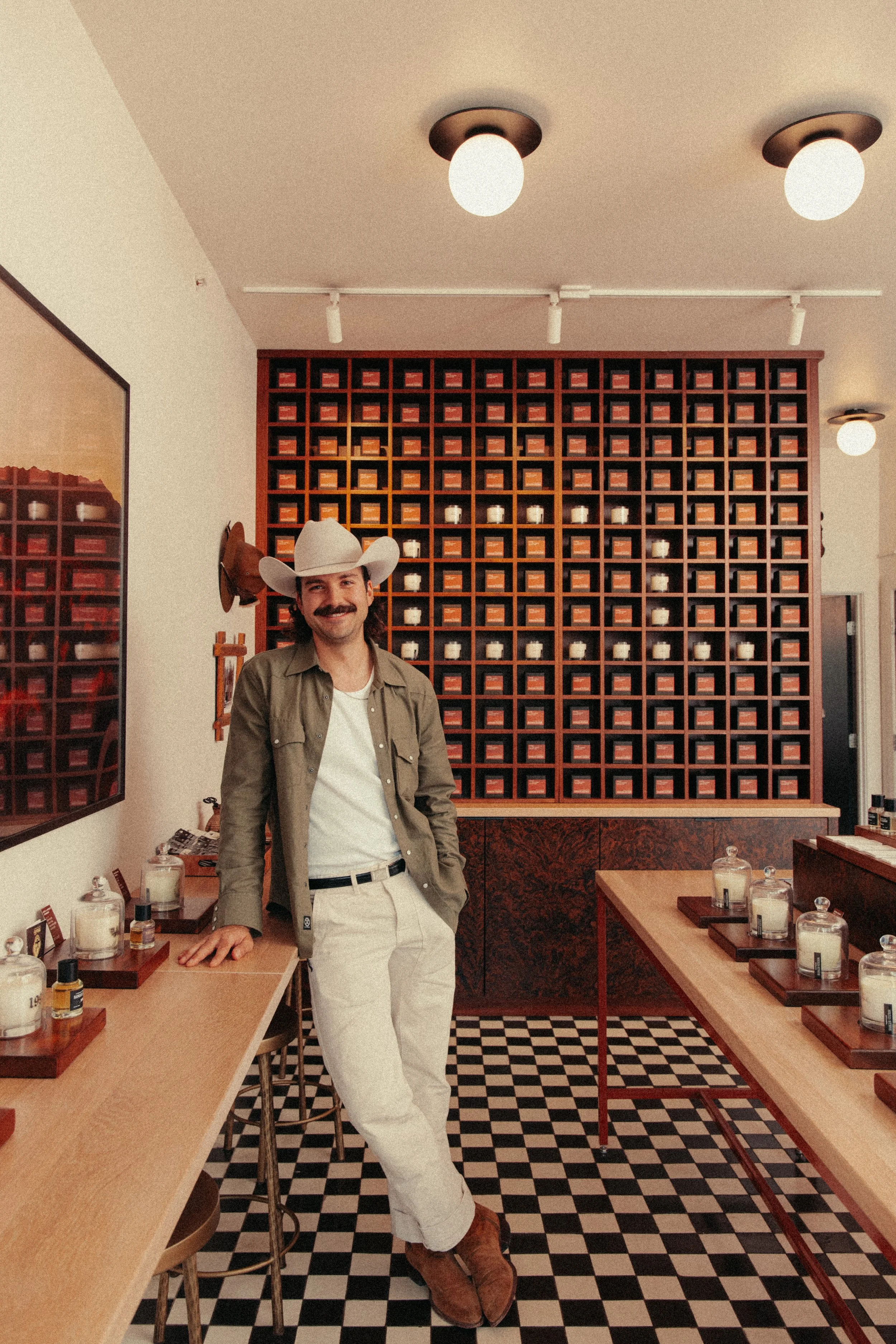
Steve Soderholm
Emily Hawarah: Tell us a little bit about how Ranger Station was born.
Steve Soderholm: I grew up in the suburbs of Minneapolis. My mom grew up in Nashville, so I've always had family here, and when I was 18, I went to Belmont, but spent all my money on a new drum kit because college was the backup plan. Once I finished school, I started touring full time.
I’ve always loved fragrance and burning candles in the house. When I was touring, I was either going a million miles an hour or zero miles an hour, gone 24/7 or home 24/7. I love being busy with creative things, so in the down time at home, I was getting into random things just to be working with my hands and doing something.
When my roommate and I were home together, we loved to have our friends over. We'd bartend for them, always with candles burning, and there I was, a touring musician with no money developing an expensive candle habit. So for no good reason one day, I was like, I'm just going to learn how to make my own.
That's kind of my story in a lot of ways. For better or worse, I don't fully think through a project before I start it. So this all started with me literally sitting on the couch one day being like, “Man, it would really be fun to make some candles tomorrow.”
From there, I started falling in love with it. I always say that if somebody told me everything that goes into making a candle, I never would have tried, but ignorance was bliss, and it eventually became this science project to figure it all out.
Fast forward a couple of years, I’m about to get married, thinking about family, and I decided to step away from touring. Ranger Station had started as a side gig, and I was always planning to figure out what was next, but as I like to say, it's been 10 years and I'm still just doing the side gig.
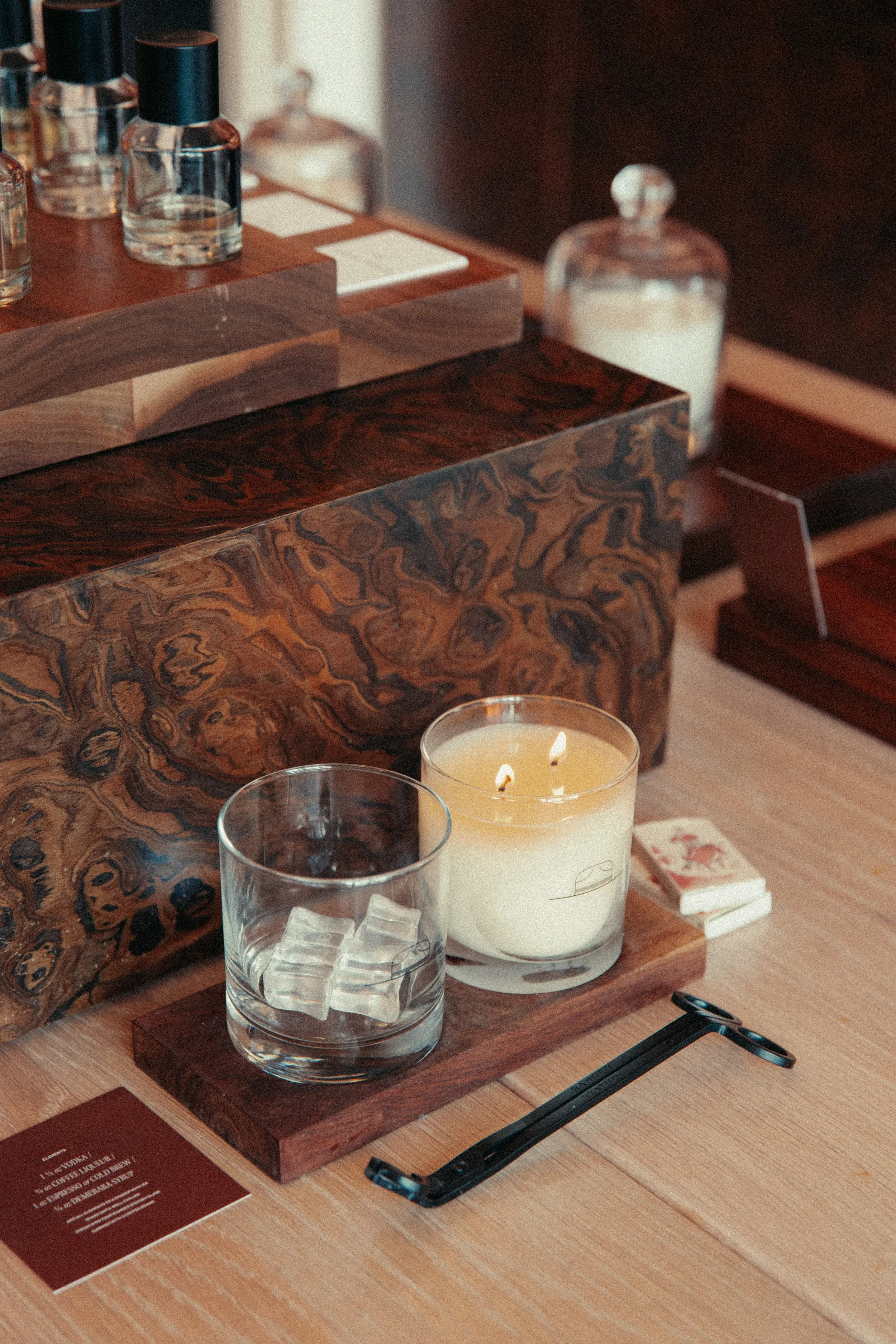
EH: You were talking about mixing drinks and burning candles for friends. And we know that you pour your candles into whiskey glasses. What does the intersection of those things in your life and in your business say about your creative philosophy?
SS: Well, that came from a really honest place too. My roommate and I were often bartending for friends, and when I would go to the stove in the kitchen to make candles, we just had a bunch of whiskey glasses right there. So I was like, “I'll just use these for the candles.” And then when the candle was done, I researched how to clean the glass out. Because I’m not going to throw a glass away! So that just stuck.
But the other thing that is really important to me is that fragrance is ultimately about creating great memories of spaces. Smell is a huge part of life’s experiences. It sets the tone for your memory and makes an experience stronger. So, the cocktail piece is just another one of those things that plays into the experience itself.
We think of our Ranger Station stores as an extension of our living room. If you walk into my house, the first thing you're going to notice is that it's going to smell good. There's always going to be some good music on a record player, and we’re going to ask if we can get you a drink. For us, it's just about creating a space for people and conversation and connection. And that's where it all started.
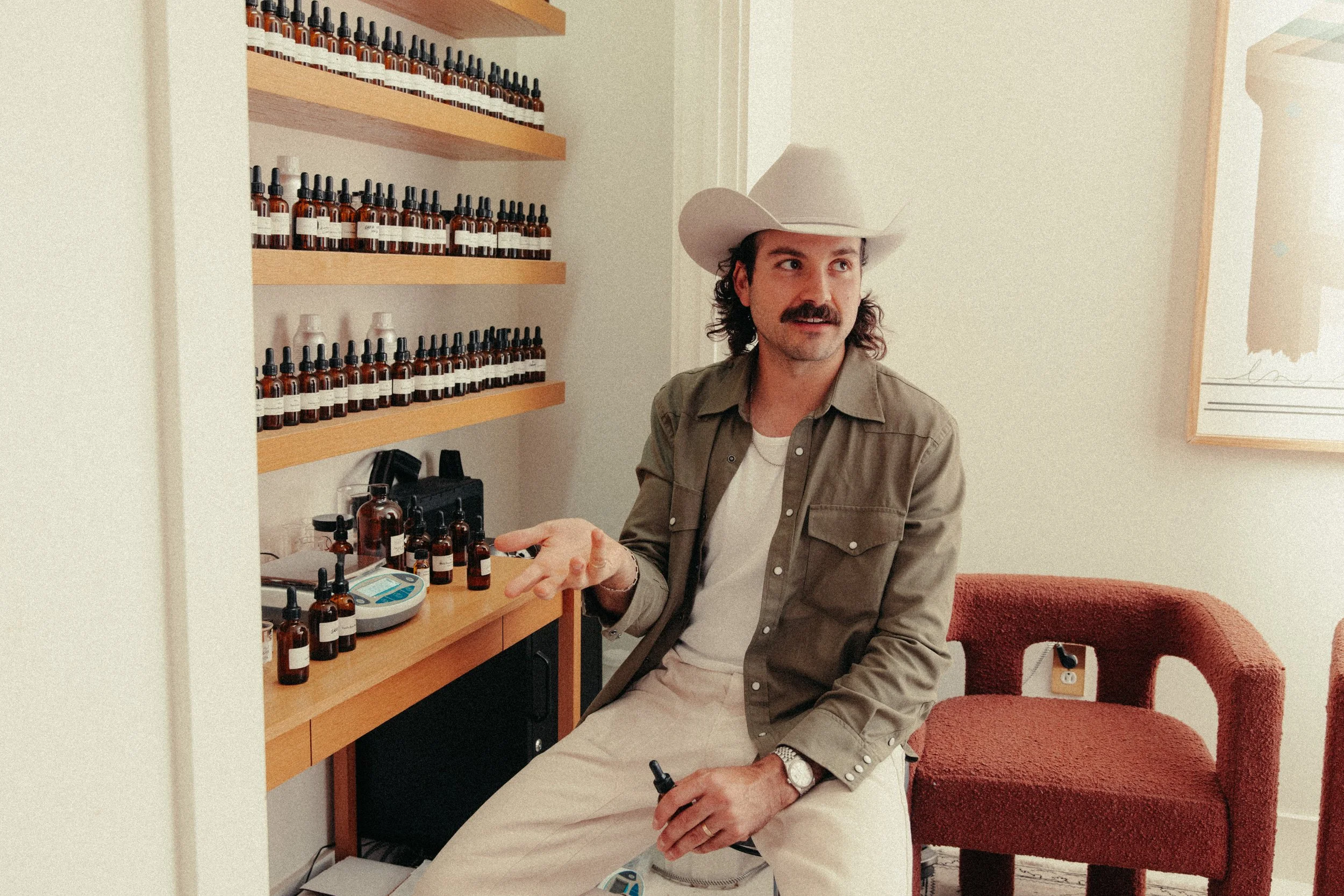
EH: That’s beautiful. On that same note, as you're creating fragrance for candles or perfumes, what are you thinking about when you’re developing the story and imagining how people will experience your products?
SS: I'm so glad you said “story” because yeah, fragrance is storytelling. I think most art forms are — maybe all art forms are. And with my background being in music, which is also a form of storytelling, you’re always trying to connect with somebody. You tell the story, and then you put it out into the world, and the song connects with people for different reasons. Everyone experiences that story, that song, differently. Perfume is the same to me.
When I sit down to perfume, it's all about what story we’re trying to tell. Like the Noah Kahan candle that we did, we wanted that fragrance to basically be another track on the Stick Season album, written in the fall in Vermont during the pandemic. There was a feeling of loneliness and angst that everyone was experiencing, and that was the story we were trying to tell.
There are other times it's just a feeling. Do we want people to feel more creative, or do we want to create a candle that’s going to be really great at the end of a stressful day? And at the end of the day, I'm just translating that story into the fragrance medium.
EH: When you're doing those artist collaborations, what does the process look like as you're trying to tell a story together?
SS: It’s such a different muscle. A big part of my job in those situations is figuring out what that story is and asking the right questions to get that story out of those people.
When we did Daisy and Cowboy with Lauren Akins, I didn’t want to think of it as creating a perfume for all these people to wear. The goal was to create a fragrance that Lauren was really proud of, and that she wanted to wear every day. And from there, her story comes through.
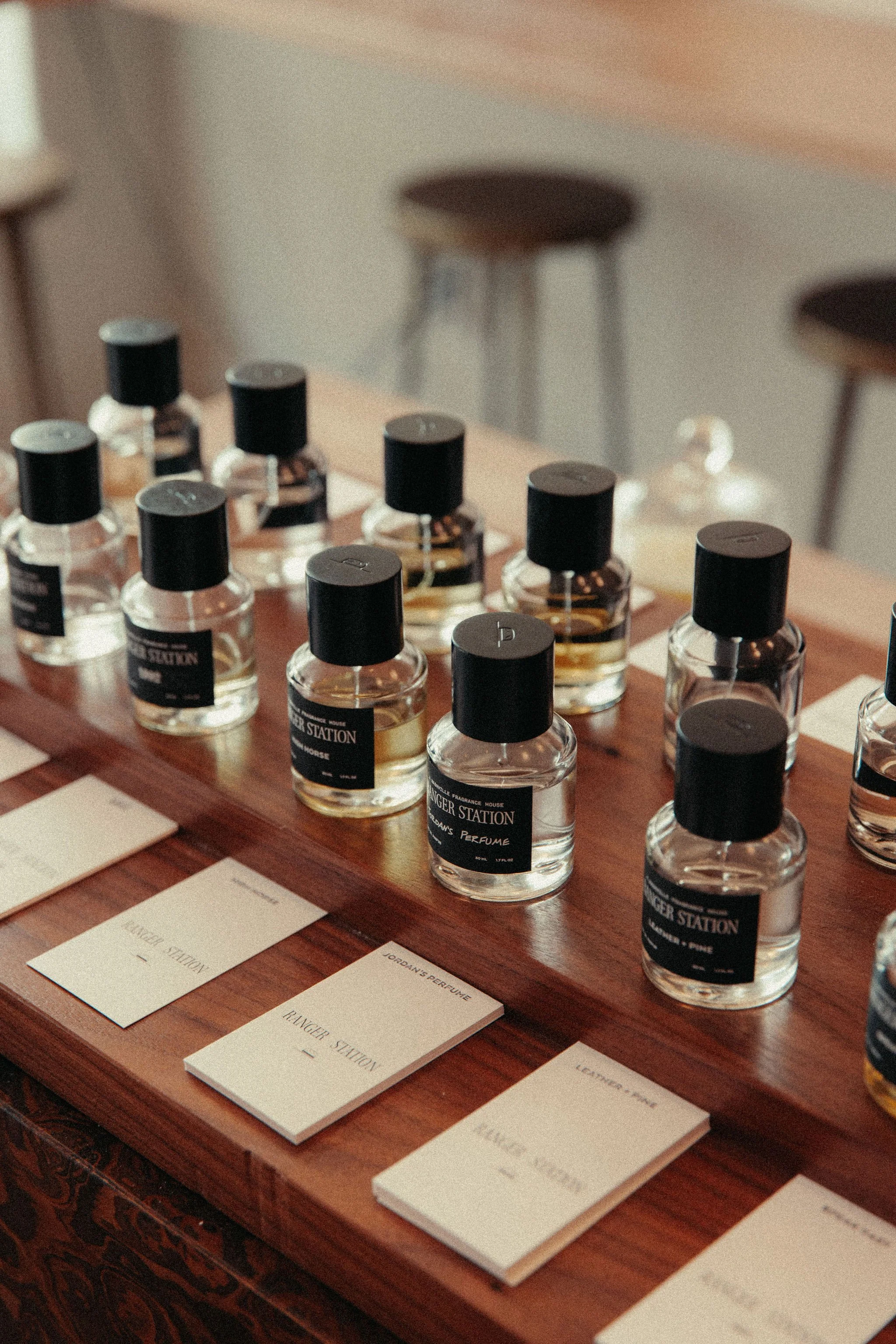
It’s kind of the same with Jordan’s Perfume. My wife, Jordan, has never worn perfume because she gets headaches. So, one year for Jordan's birthday, I decided I wanted to make a simple perfume for her that wouldn’t give her a headache. The year before, we were walking around the Mayfair area of London in the fall. It was absolutely gorgeous, and I remember Jordan pointing out a really amazing smell, which she never does. And since fragrance is such a powerful memory maker, I was able to find a sandalwood note that was perfect and allowed me to recreate that memory for her.
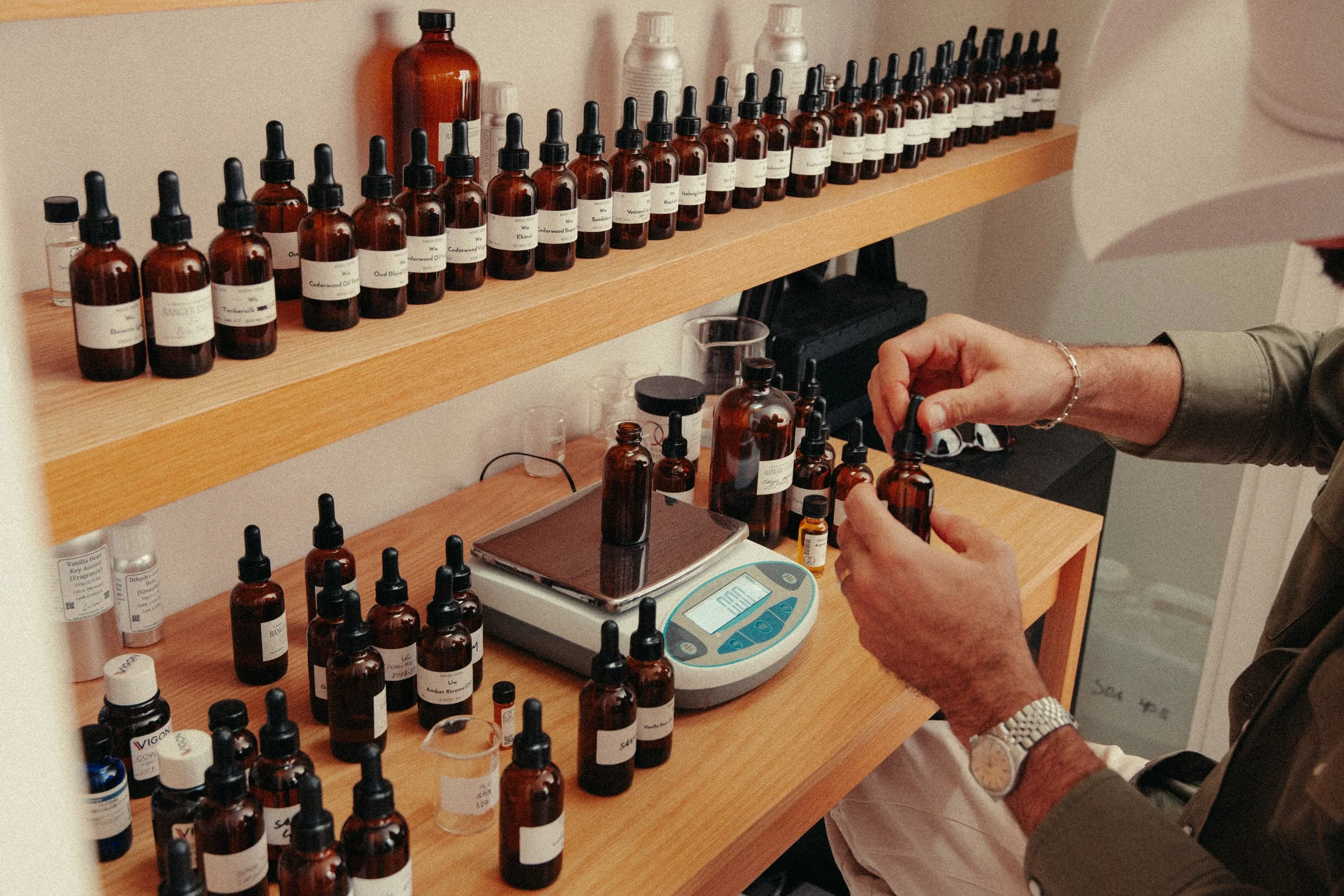
EH: Ok, so let’s talk about creating those smells. You’ve been calling this wall of fragrances behind you your organ, and each of the raw materials the notes. Can you talk a little bit more about how you experience each of those specific notes and use them to compose fragrances?
SS: When you're writing a song, the words are the story. The music itself is what brings that story to life. So we start with the story, and then we bring in the scent notes.
People ask me if I miss playing music. And I definitely do, but I feel more musical now than I did then, and that’s because of this aspect. We've got a story in mind — where we want to end up — and then we work with individual notes to build fragrance accords (just like a music chord), and use those accords to build a song or story.
On a more technical level, all fragrances are going to be broken down into top notes, middle notes and base notes. For musicians, it's easy to think of treble, middle and bass. You're tuning your car radio; everybody loves to turn up the bass. Fragrance notes are the same way.
Top notes are going to be those light, fresh, citrusy, piercing notes that you're going to notice right away. They're really small molecules with tons of energy that vibrate really fast. Base notes are the opposite. They’re really big molecules that vibrate slowly and are harder to notice at first.
When you put a fragrance on in the morning, you're smelling the top notes first. By the end of the day, what you're smelling are the base notes.
EH: A lot of people struggle with exploring creative careers because they aren’t classically trained. What is your philosophy behind allowing yourself permission to explore as a fragrance designer?
SS: Big respect for classically trained perfumers, but I am not one of them. We’re the punk rockers of the fragrance world.
Growing up, my mom was always supportive of me pursuing my dreams. I was always a good student and got joy out of working hard and learning. I thought I was going to be a doctor, make a ton of money and retire early. But something about the idea of work being a means to an end didn’t excite me.
I had a drum teacher who nonchalantly told me I had what it takes to play drums as a career. And that never felt like a means to an end. No matter how much money it made, no matter how much “success” it drove, it was worth doing because of the joy it brought me and the people I was able to do it with. When I fall in love with something, I can’t just not do it.
When I was first starting Ranger Station, a mentor told me that the worst-case scenario of starting this business would be looking back one day and regretting that I didn't try. And that really shifted things for me.
So now, when we have a crazy idea, we're going to try it. And if it works, great. If it doesn't work, it's going to lead us to whatever that next thing is.
EH: You’re focused on the people, the experience, the adventure of life. How does your ideal of embracing adventure shape how you've grown Ranger Station over the past 10 years?
SS: I have to look at it like an adventure. The same fears that were there on day one are still there, but they’re bigger now. I have to view this through the lens of adventure.
For ourselves, and our team, and everybody using our products, it has to come back to experience. This has to come back to memory. At the end of our lives, what do we have? It's the memories. Never losing sight of that, we are doing American fragrance through the lens of quality and accessibility.
When we opened our New York store, people would come in and ask how much a bottle of perfume cost. And when we told them, you could see on their faces that they assumed it must not be good. We had to explain that the juice in the bottle is the same quality, but we’re doing it without the markup. We want as many people as possible to experience our stories and live the adventures.
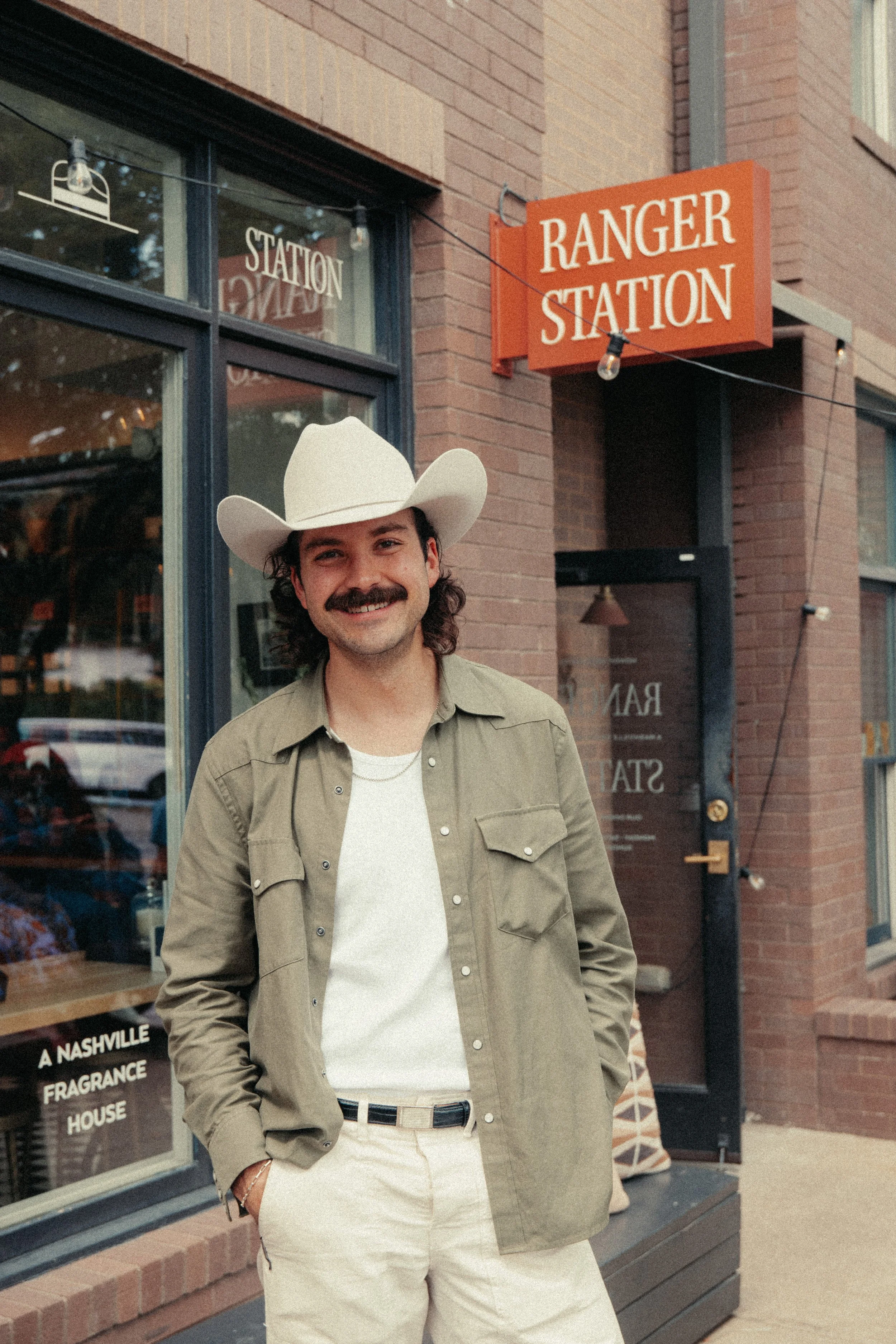
EH: Ranger Station has been in business for 10 years, and you’re expanding into new geographies and spaces. Of course we will always claim you as a Nashville brand. What specific parts of Nashville are you taking with you as you expand out into other parts of the world?
SS: Nashville is really special. Ranger Station wouldn’t be a thing without Nashville. I almost forget that not everywhere is like Nashville, but traveling a lot makes you realize that Nashville is super unique.
The best example I can give of that is that when I moved here to play music, and when we started Ranger Station, no one ever questioned those things being a real job. In Nashville, you’re always surrounded by people that are pursuing cool ideas and helping each other figure out what’s next. Even through the growth, it has retained that. It's not a competitive culture. We support each other here, and the creative community supports new ideas.
This is what we have naturally baked into the Ranger Station brand. And I want to make sure that sense of exploration is present whether we’re sending a candle to Montana or opening a store in New York City.
EH: When you look back on your journey and where you are now, what is the biggest takeaway you can share as someone who is designing fragrances and learning as you go?
SS: It’s easy to feel like you have no idea what you're doing. It's easy to not do it and not take the risk. But my biggest takeaway is just that, in the moment, those things that feel so big and powerful and scary are never that big of a deal in the end.
Moving forward, what that's done for me — and what I would hope it does for other people as they're trying new things — is to allow me the freedom to go do whatever it is, and enjoy the time that you're in. Don’t let the fear have more power than it deserves.
I get bored if we're not taking risks. Let that drive you. Let that be the thing that tells you you're doing something new and exciting and exactly what you need to be doing.
It’s ok to pave a path that isn’t paved yet. The reward is much bigger than the risk. And even if it fails, the reward is still there. We fail at stuff all the time, but that leads us to a lot of cool things in the end.
There is beauty in the mess.