



From Soil to Structure: The Poetic Groundwork of Studio YUDA
Story By: Jayla Jackson
Photography By: Daniel Meigs
Featuring: Alexandros Darsinos, Studio YUDA
Nashville Design Week 2025
Blending conceptual depth with bold creativity, Alexandros Darsinos approaches architecture as both an art form and a way of rethinking human experience. As co-founder of the internationally recognized Studio YUDA, he leads the firm’s U.S. base in Nashville, where his vision fuels an ongoing exploration of how design can shape emotion, interaction, and place. Alongside partner YuChen Guo in Shanghai, Darsinos has built a practice defined by cross-cultural dialogue and interdisciplinary experimentation, one that continually challenges convention and crafts spaces that resonate with meaning and imagination.
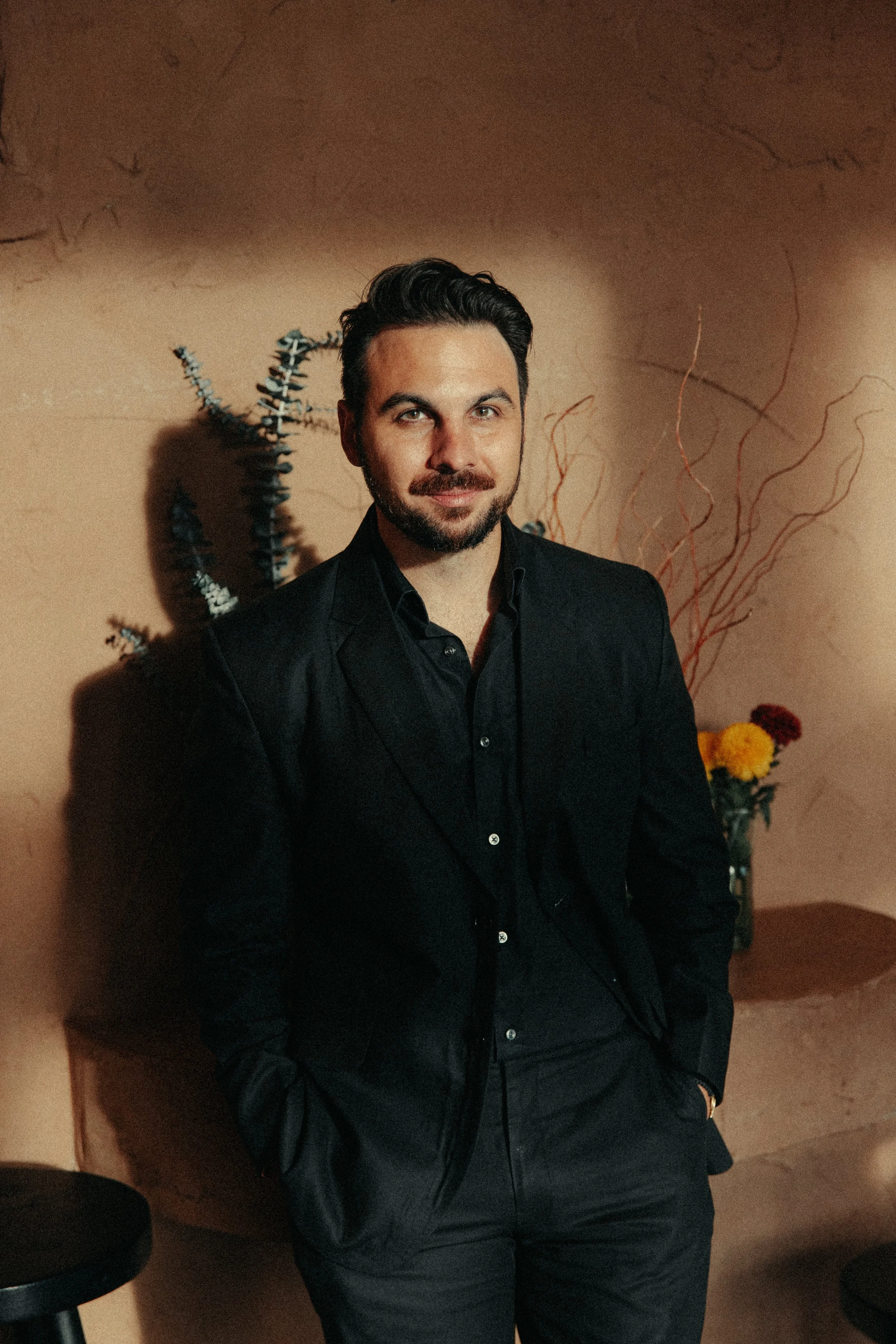
Alexandros Darsinos
Jayla Jackson: So share your background and the meaning behind Studio YUDA.
Alexandros Darsinos: Yeah, so the name actually derives from my last name, Darcinos, which is the DA part and my partner's name, Yuchen. We went to school together at Columbia and we actually came back to Nashville and started our first project together, and his visa expired at the time, so he went back to his home and he opened up a firm there and we kept the firm here at the same time.
I was actually born in Nashville. My father was Greek, and so I spent a lot of my life going back and forth. So I left Nashville when I was around 15 years old and went to Greece and finished high school and then took a year off to explore myself a little bit before coming back to the U.S to go to college. I went to undergrad at Clemson, South Carolina for architecture school and then I went to Columbia for grad school right after undergrad, and it ended up being a 3-year experience at Columbia in New York, it was an amazing experience as an architect as well.
After that, I worked in Japan a little bit. I worked so hard in Japan that at the time I was like, if I'm going to work this hard, I'm going to work for myself. So I came back to Nashville, was surrounded by family, and had their support to kind of do my own thing. That's how Studio YUDA came about.
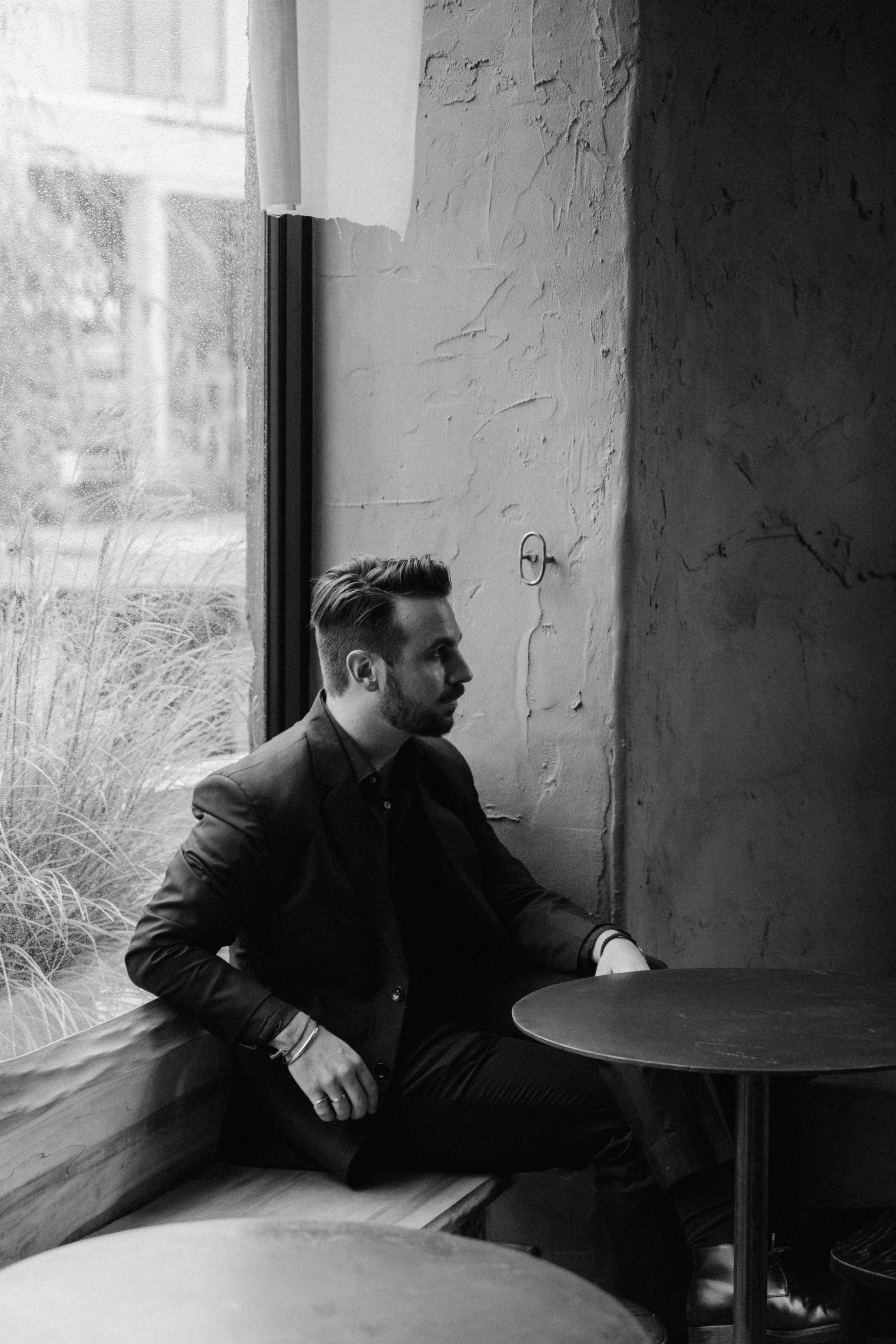
JJ: Wow! Now while in Japan, what experiences did you have with architecture that made you believe I can do XYZ myself?
AD: Absolutely none. It was all an inner self-confidence idea of, man, we're working until 2 a.m., six days a week. It was almost like, you know, it's time. If I'm going to do something, now's the time and I'm an executor. So when I have an idea in my head, I just go for it, regardless of being prepared or not prepared or what not, I thought I would just shoot my shot and give it a chance.
Also coming back to Nashville felt very comfortable. I felt like that was the perfect place to take a stab and do something. I mean, you can see by my first project that I knew what I was doing, but I had no clue what I was doing at the same time. You could argue both sides of the framework.
When I first came back and was introduced to the world of architecture in the U.S - that naivety is what made me stand apart a little bit with the design work being very unique and very unusual to what was going on at the time in Nashville.
JJ: So, of course, your work is known for its strong conceptual foundation. How do you define conceptual design in your practice?
AD: Okay, so actually, I really love that question because, I mean, not many people pick up on this, but concept to me is everything. It's so important. And for me, a lot of my concept is derived from nature and that's where I find a lot of inspiration. There's so many differences. For me, it's always a dialogue of architecture and nature and how they interrelate together. And sometimes, architecture can frame nature, sometimes it can mimic nature … sometimes it can just be a poetic metaphor of what nature means to architecture or how architecture can create this metaphor of being in nature.
There's so much opportunity to explore there and that's where a lot of my inspiration comes. But going back to the actual question, which is the concept base, concept for me is so quintessential to every project. It drives the atmosphere, it drives the project, it drives the details, it drives everything that you do.
It's like, if you don't have a good concept, I always believe that the project lacks vision and holistic nature. It lacks clarity. And when you have a strong concept, every little detail is easier to figure out, because every decision ties it back to the essence of what the concept was or what it should be.
I think what sets our firm apart a little bit is that we try to be very holistic. So from architecture to interior design all the way to the furniture. When you can control every element of the design to tie it back to the original concept, then I think the concept can kind of take weight and come through very clearly.
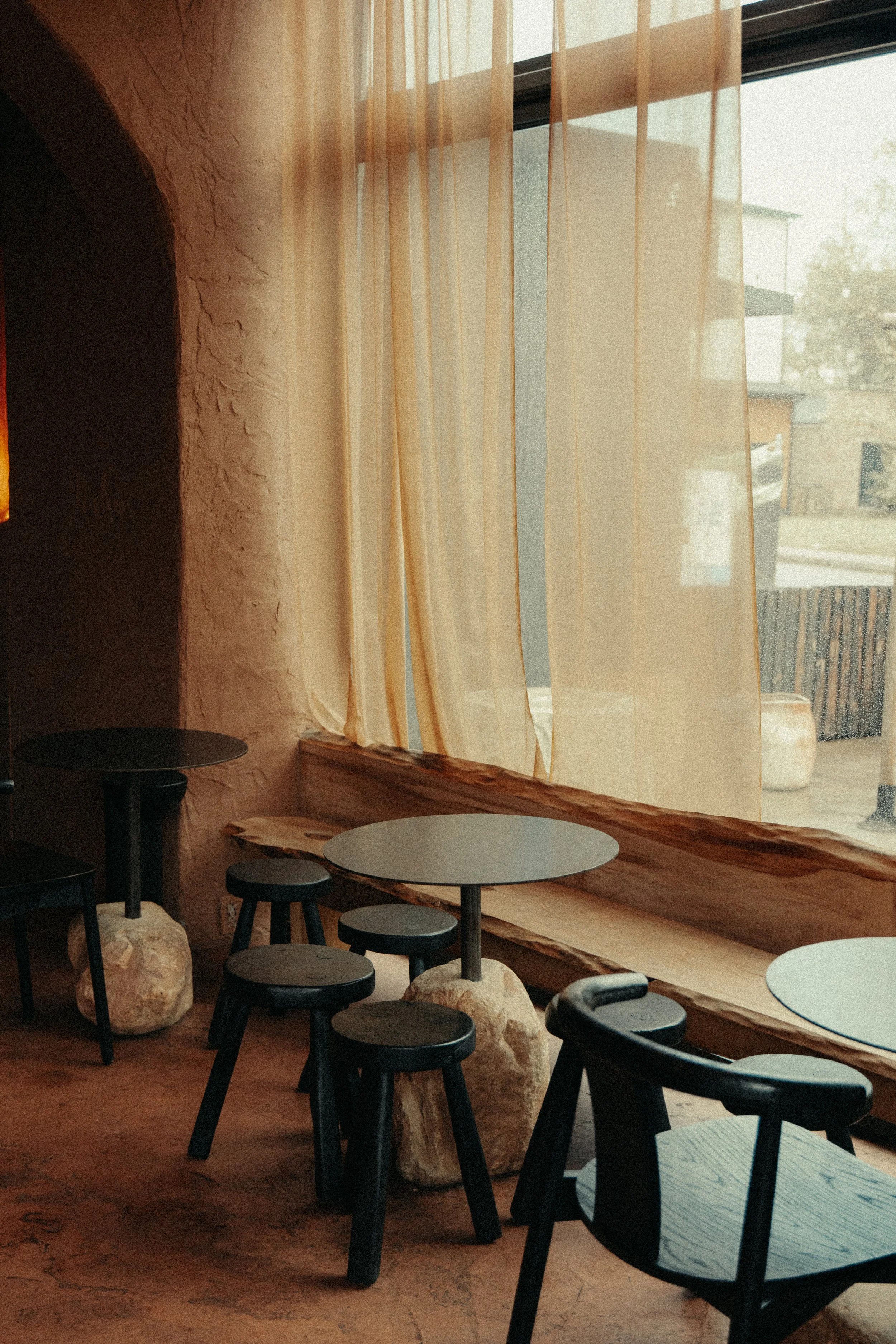
Cafe Babu
JJ: How do you balance both conceptual ideas with the practical realities of construction and client needs?
AD:I think that's a question that we always struggle with every single day.
But it goes back to being very truthful and often honest with what the project is all the way from the very beginning, the very initial idea or sketch. Sometimes a project doesn't begin with a plan or drawing. Sometimes it begins with a conversation, just an idea, like saying what you want it to feel like.
When the concept and when that conversation is clear to everyone, that drives how we framework. It's like you're creating your own language, and thus, when we talk about it, everyone should be on the same page. And so for me, it's like even with the contractor who has very little information about the project, when they start understanding your language that you created, I think that is when all these little decisions happen, almost naturally.
I'll use an example of creating a very fluid space that feels like water. When there's a problem that arises and the project is like, oh, how do we confront this? The language is so strong even if someone with a little information, like a contractor, would be like, it needs to be this way, because that will fulfill the vision of what is happening or what is being done. We try to create that conversation, that dialogue very early on so that everyone, the client, us, and the contractor are very much in tune with what the process is and what it will be or what it will feel and what it will create.
JJ: I love that. I love how you make it pretty much seem like it's not just blueprints – it's a conversation, a simple conversation can yield so much creativity, evidently.
AD: Exactly, one good example is Rooted. That project was very good from start to finish. It was the idea or the concept of creating a retail space that felt like a garden. And so it's more of a metaphor in that way.
We have these concrete walls that feel like they divide up the garden as you walk around. We have these glass boxes that feel like water. We have all the clothes that change seasonally that were supposed to be the flowers. The whole place feels like a maze you move in and out of, and you're constantly discovering things as you go from one space to the next. And so in that way, it's like from the beginning, the conversation about the project was let's make a garden. And then after that, everything was like, okay, what does a garden have?
It has flowers, it has a pathway, it has water, it has rocks, it has these elements that were just, you know, layering it in with architecture as to those elements and how they feel in the space.
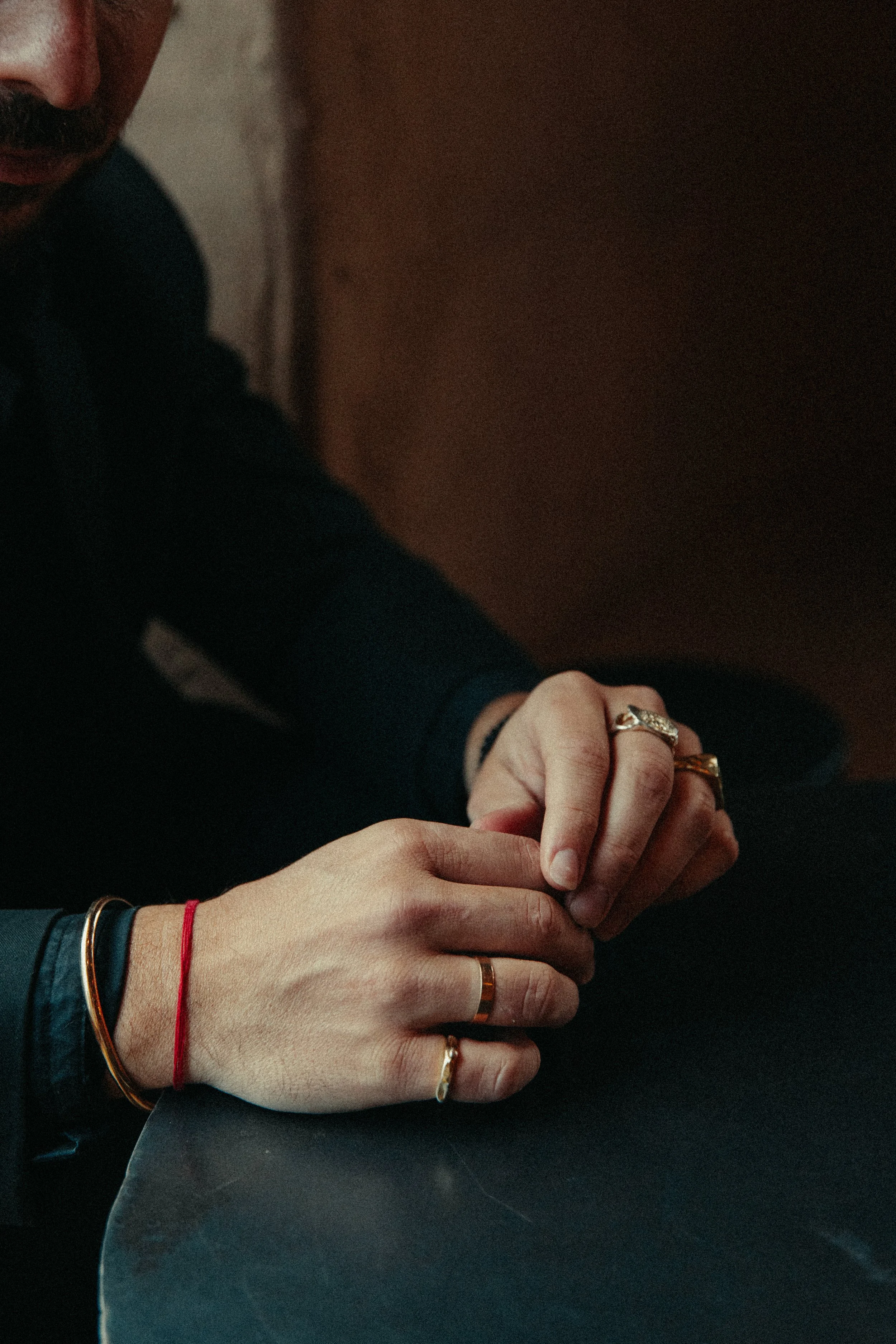
JJ: What were some of your biggest design lessons that came out of working in Japan?
AD: So, you know, being Greek, being from Nashville, marrying an Indian girl, working in Japan, and traveling a lot, I think that one thing that it was always true was that I was very, very fascinated, with strong cultures, and strong identities. When I got out of school, I was like, I'm gonna go straight to Japan, because these craft-like ideas, like the Wisabi movement, had such soul and culture when they built and designed things with their own hands.
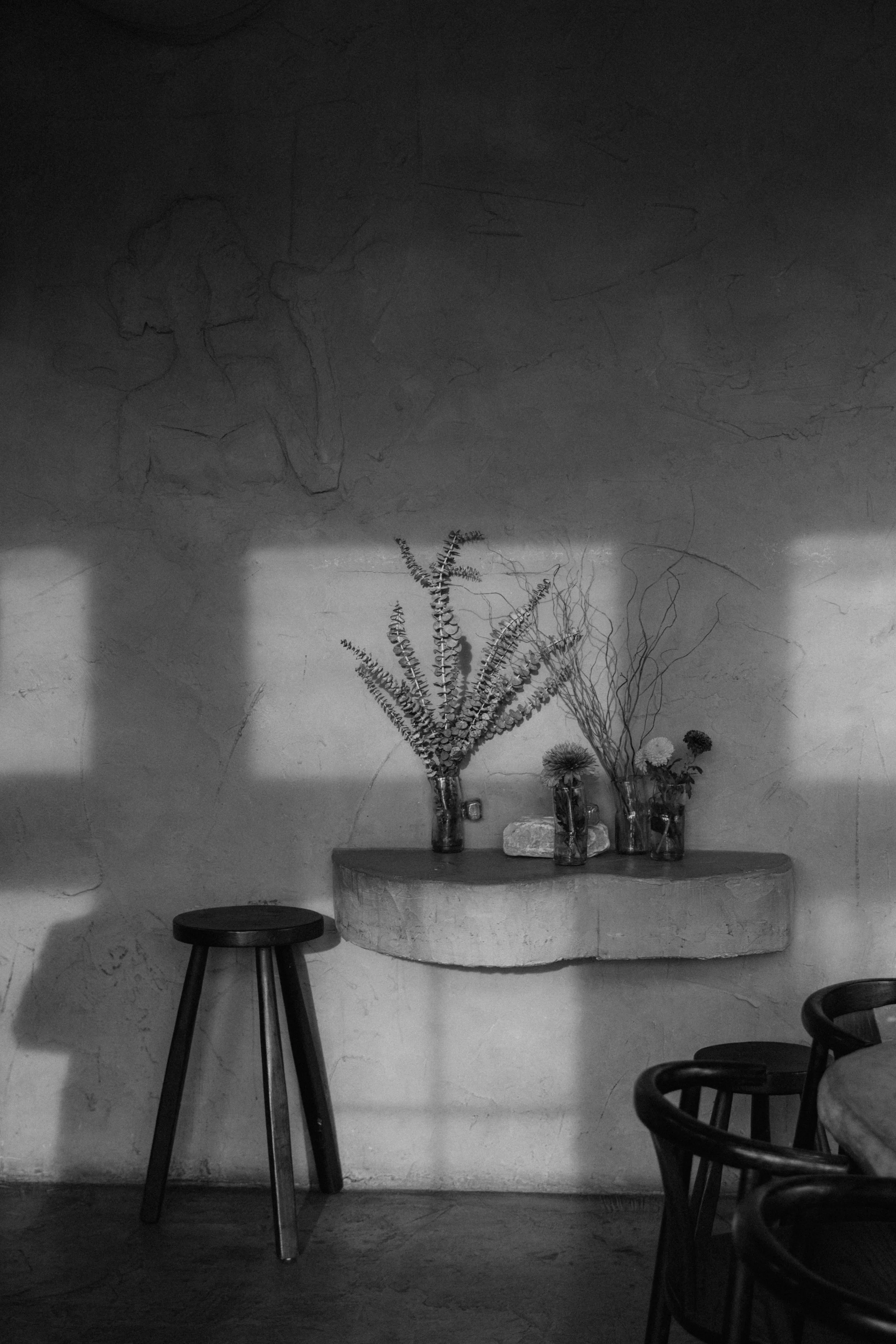
And one thing that I've realized too, since she [Shivani Darsinos] opened this [Cafe Babu] is people will come in here from South America, from Asia, from all over, they'll come in and they'll say, I don't know what it is, but this place feels familiar for some reason. They might, you know, identify it with a certain region, but they also say, it kind of feels like going back home. Even though their home might not be anywhere we've either ever been or thought of when we were designing it.
There's tactility that you find in the rural areas and even in Mexico or in Colombia or in Morocco or in Greece or in India, I think these kinds of elements of humanity that were coming through were so important to how I designed. And maybe in the beginning, I didn't think of that conceptually too much in my earlier work, but I think as I get further and further along with my work, I do find that so important, that message, those concepts, in everything I do.
JJ: How do you and YuChen influence each other's design sensibility?
AD: It's interesting. The reason we connected the most when we were in school was because school for a lot of people is very academic as it should be, but it's also very conversational and very debate oriented. YuChen and I — we call him Joe. Joe and I were one of the only two people in school together that would like to talk less and build more.
So we had a very execution-based mindset. Whatever we were doing, people would talk about it. We were like, let's just go build something. Let's go make something happen. So that's why as soon as we got out of school, we both had an itch to not just talk about it and design things and maybe one day we'll build our own thing, but to immediately build it.
We influenced each other a lot in the beginning about academia, about pushing each other and how we see architecture, understand architecture, and understand all the different architects and cultures that influence it. Later on, as we developed our own languages, it really became about those cultural differences and those conversations of culture that we had to kind of push each other to influence each other's designs.
JJ: Have you ever used local context and taken it outside the United States?
AD: We have done it. We have a couple examples I can share with you.
JJ: Yeah, go for it!
AD: So I think a lot of the Southern mentality, which I would say when I grew up, has always been less about design approach and more about hospitality or feeling or atmosphere of processional space when you go into a space, how you're greeted, how you're met, and how you're received. And the way we try to infuse those concepts — particularly softness — into materials, design, and motifs. A lot of the Eastern Asian market for a long time, especially in China and Japan, was always looked at like luxury in terms of high materialities, super clean stuff, LED tape lights, very modern, very postmodern mentality.
And I think a lot of Nashville, the reason I love it, again, goes back to some of those rusticated elements that you find. Like, and I hate to bring this up, but it's almost like the stable mentality. It's like I'm always interested in this “farmer beginning”.
You go into a horse stable and it's like, how do those materials and feelings and atmospheres feel? And I feel like a lot of that can be found here. Some of Nashville’s architecture … Nashville Architecture is a whole other conversation. We tried to bring it outside, but some of it has already been brought in and it's brought in from outside and it’s almost just copy paste or replicated and not really authentic.
I think the rustic nature of wood, woodworking, and how we handle those aspects, also the stable mentality, does not even exist there and farm mentality is not a lot where they're at. So bringing those [elements] in is very, you know, influential.
JJ: So, looking ahead – what’s next?
AD: Very good question. We are actually at an interesting point of transition.
So, you know, we talked about how architecture is slow. And Shivani and I, we do like to do things quickly and I'm an executionist and we like to change the fabric and move things along as quickly as possible. So we're actually opening up a fashion brand within the next year.
We have a storefront fashion brand that will also be another step in pushing the boundaries here and changing things a little bit. So we're making all of our own designs. We're getting inspiration again from India, from Greece and culturally, from different parts of the world and trying to do something a little bit unique and abstractive here.
So that's the next big thing. That and balancing the architecture work.
JJ: Oh my goodness, that’s amazing and you’ve got it!
AD: I think that's what I'm most excited about. It's something that’s been a part of me for a long time. She's finally helping me fulfill my dreams, too. Last year was her passion for the cafe, next year will be the fashion house, so it'll be nice.